Creating a meme coin used to sound like a job for blockchain developers.
You might imagine smart contracts, command-line tools, wallets, blockchain explorers, and complicated code.
Today, that isn’t necessarily the case.
Modern blockchain infrastructure and no-code token creation tools allow creators to launch a basic meme token without writing a smart contract from scratch.
But there is an important distinction:
Creating a meme coin is easy. Building a meme coin project that people trust, trade, and remember is much harder.
The technical deployment can take minutes.
The decisions around supply, branding, liquidity, distribution, security, community, and transparency require considerably more thought.
This guide explains how to create a meme coin without coding, with a particular focus on Solana, one of the most active ecosystems for community-driven tokens.
What Is a Meme Coin?
A meme coin is a cryptocurrency token primarily associated with an internet meme, cultural reference, community, character, joke, or social trend.
Unlike many utility-focused crypto projects, meme coins often start with community and culture rather than complex technology.
Their appeal can come from:
- Memes
- Social communities
- Internet culture
- Viral marketing
- Community participation
- Celebrity or influencer attention
- Speculation
- Brand identity
However, a meme coin is still a blockchain asset.
It has a real on-chain identity, supply, holders, transactions, and potentially a market.
That means creators should treat the technical side seriously even if the project’s theme is intentionally playful.
Can You Create a Meme Coin Without Coding?
Yes.
A standard meme token does not necessarily require you to write custom blockchain code.
No-code token creators can provide interfaces where you enter information such as:
- Token name
- Symbol
- Supply
- Decimals
- Description
- Logo
- Social links
- Authority settings
The platform then handles the underlying token-creation transactions.
For example, IDX Launchlab provides a guided workflow for creating an SPL token without manually writing and deploying token-program code.
This is particularly useful for creators who understand the concept and branding of their project but don’t have blockchain development experience.
Why Solana Is Popular for Meme Coins
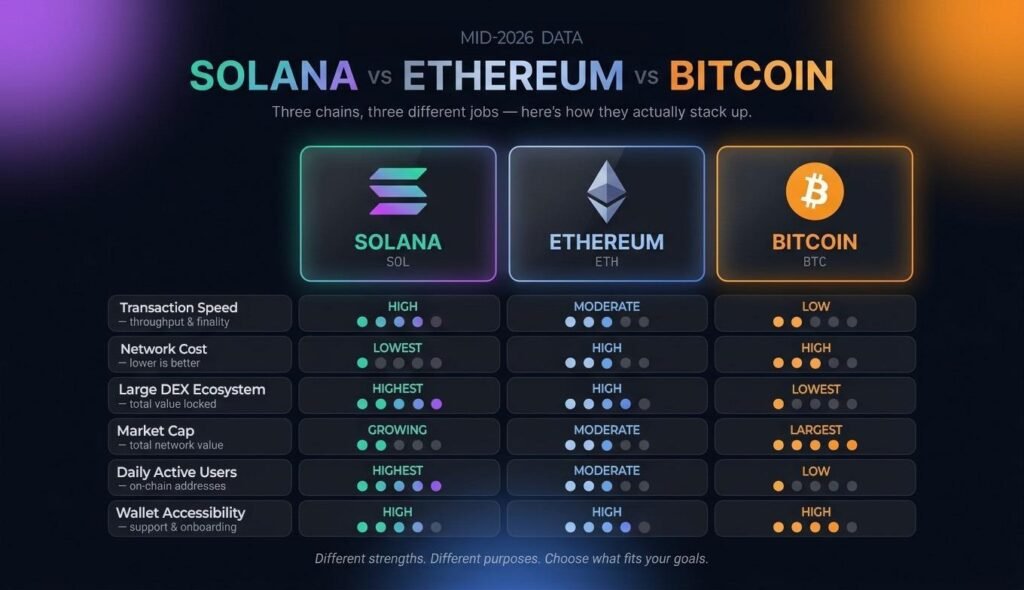
Solana has become a major ecosystem for meme-token activity.
Several characteristics make the network attractive:
Fast Transactions
Solana is designed for high-throughput applications and can process large numbers of transactions.
Low Network Costs
Transaction costs can be relatively low compared with some other blockchain ecosystems, making frequent trading more practical.
Large DEX Ecosystem
Solana has a mature decentralized trading ecosystem where newly created tokens can potentially establish markets.
Large User Base
The network has attracted a significant community of traders, developers, creators, and Web3 users.
Wallet Accessibility
Popular Solana wallets make it relatively straightforward for users to hold and interact with tokens.
These characteristics make Solana particularly interesting for community-driven token launches.
Step 1: Create the Meme Concept
Don’t start with the token creator.
Start with the meme.
Ask:
Why would someone want to share this token with another person?
A successful meme coin usually has a recognizable identity.
That could be:
- A character
- An animal
- A phrase
- An internet joke
- A cultural reference
- A community concept
- A humorous interpretation of current events
For example, instead of starting with:
“I want to create a token.”
Start with:
“I want to build an internet-native community around this character.”
The token then becomes part of that ecosystem.
Step 2: Choose a Name and Ticker
Your meme coin needs two primary identifiers:
Name
and
Ticker/symbol
For example:
Name: MoonDog
Ticker: MDOG
Your name should ideally be:
- Memorable
- Easy to spell
- Easy to search
- Distinctive
- Consistent with your branding
Important:
The ticker isn’t the true identity of your token.
The mint address is.
Anyone can create another token using the same or a similar name.
That’s why your official website should always publish the correct mint address.
Step 3: Design the Logo and Brand
For a meme coin, branding can be almost as important as the technical infrastructure.
Your logo may appear on:
- Wallets
- DEX interfaces
- Token trackers
- Social media
- Websites
- Community channels
- Trading dashboards
A good meme coin identity should be recognizable even when the logo is displayed as a small icon.
Keep the visual identity simple.
A strong logo often works better than an overly complicated design.
Think about:
- One recognizable character
- Strong silhouette
- Simple typography
- Consistent colors
- Memorable visual elements
Step 4: Decide the Total Supply
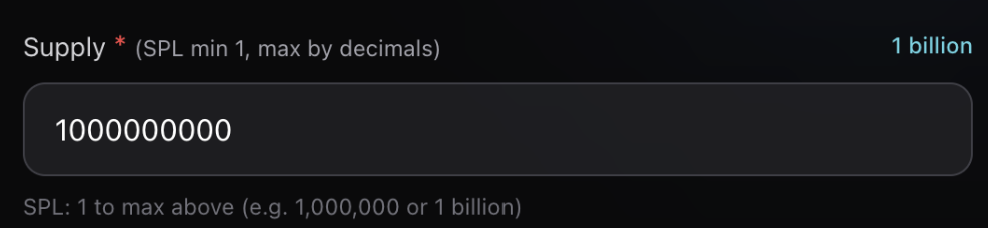
Next comes token supply.
You might choose:
1 million
100 million
1 billion
10 billion
or another amount.
But don’t assume a larger supply means a cheaper token.
That’s one of the biggest misconceptions in crypto.
Suppose:
1 billion tokens × $0.01 = $10 million
The token’s price only makes sense when considered alongside its supply and valuation.
For a meme coin, choose a supply that fits your intended branding and distribution model rather than copying another project’s number.
Step 5: Choose Decimals
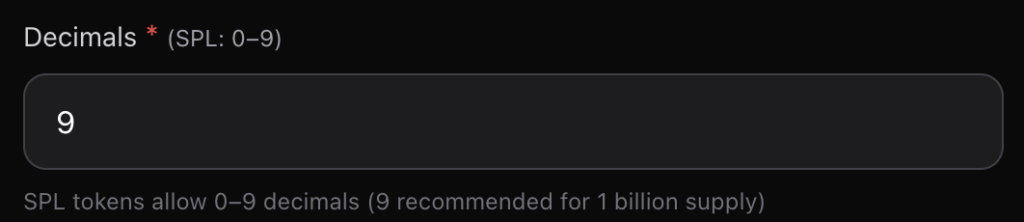
Decimals determine how precisely the token can be divided.
For example, with 9 decimals, the token can be represented down to:
0.000000001
Decimals are a technical parameter, not a measure of value.
For a standard Solana token, your creation tool will typically let you configure this during setup.
If you aren’t sure which setting to use, avoid changing technical parameters simply because another token uses them.
Choose a sensible configuration and keep it consistent with your intended ecosystem.
Step 6: Decide Your Tokenomics
Meme coins don’t necessarily need complicated tokenomics.
In fact, unnecessary complexity can sometimes make a community token harder to understand.
A simple distribution might look like:
| Allocation | Example |
| Community | 40% |
| Liquidity | 25% |
| Treasury | 15% |
| Marketing | 10% |
| Team | 10% |
These numbers are illustrative only.
There is no universal “correct” allocation.
What matters is transparency.
If the team owns 20%, say 20%.
If 40% goes to liquidity, explain it.
If team tokens are locked, publish the details.
Step 7: Decide Whether You Need a Fixed Supply
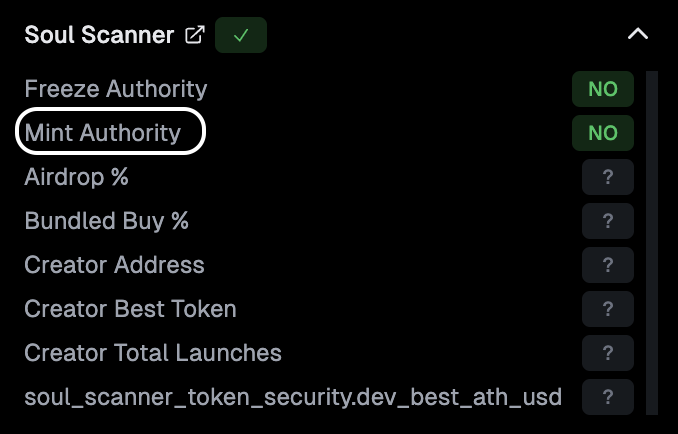
Alt text: [What is mint authority of a solana token]
One of the most important decisions is whether additional tokens can be created later.
On Solana, this is connected to the mint authority.
If mint authority remains active, additional tokens can potentially be minted according to the authority’s permissions.
If the mint authority is revoked, that authority can no longer mint additional supply.
For a meme coin, this decision can significantly affect community trust.
Fixed Supply
Potential advantages:
- Easier for users to understand
- Stronger supply certainty
- No unexpected inflation from future minting
Active Mint Authority
Potential advantages:
- Future flexibility
- Ability to create ecosystem incentives
- Ability to fund future distributions
But an active authority should be clearly disclosed.
Don’t tell the community that supply is fixed if the project retains the ability to mint more tokens.
Step 8: Decide About Freeze Authority
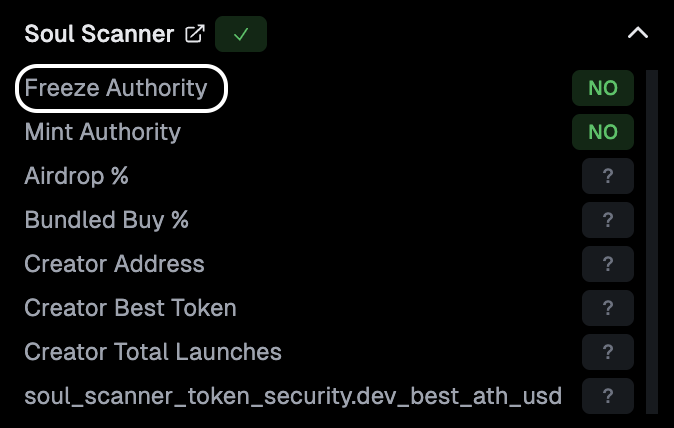
Alt text: [What is freeze authority of a solana token]
Solana tokens can also have a freeze authority.
When enabled, this authority can freeze token accounts under the applicable token program rules.
That can be useful for certain applications.
For a community-driven meme coin, however, it may raise questions among traders.
If your token has freeze authority, explain why.
If you revoke it, make the transaction verifiable.
Transparency is more important than simply choosing the option that sounds better in marketing.
Step 9: Add Token Metadata
Your token isn’t finished when the mint is created.
You need metadata so wallets, explorers, and applications can display information about it.
Metadata can include:
- Name
- Symbol
- Logo
- Description
- Website
- Social accounts
For standard Solana tokens, metadata can be associated with the token using established Solana ecosystem infrastructure such as Metaplex Token Metadata.
Your branding should remain consistent across:
- Token metadata
- Website
- X/Twitter
- Telegram
- Discord
- Community pages
Inconsistencies make projects look unfinished.
Step 10: Create Your Meme Coin Without Coding
This is where a no-code token creator becomes useful.
The basic workflow is:
Connect Wallet
↓
Choose Token Type
↓
Enter Name & Symbol
↓
Set Supply & Decimals
↓
Upload Logo
↓
Add Description & Social Links
↓
Configure Authorities
↓
Review
↓
Create Token
A tool such as IDX Launchlab can simplify this process by providing a graphical interface instead of requiring you to manually interact with token-program commands.
Important:
No-code doesn’t mean no decisions.
You still need to understand what you’re creating.
How Long Does It Take to Create a Meme Coin?
The technical creation process can be very fast.
With a no-code tool, the basic token deployment may take only a few minutes.
But don’t confuse:
Token creation time
with
Project launch time.
A serious launch also requires:
- Branding
- Tokenomics
- Website
- Community
- Liquidity
- Distribution strategy
- Security
- Communication
- Post-launch monitoring
The token can be created in minutes.
Building a credible project can take months.
Step 11: Test Before Going Live
Even if you’re using a no-code platform, testing is important.
Use Solana devnet where appropriate to understand:
- How the token appears
- How transfers work
- How metadata displays
- How wallets recognize it
- How authority settings behave
Devnet allows you to experiment without risking real funds.
This is especially useful for first-time token creators.
Step 12: Deploy the Meme Coin on Mainnet
Once you’ve reviewed everything, you can create the production token on Solana mainnet.
Before confirming the transaction, verify:
Token Name
Correct?
Symbol
Correct?
Supply
Correct?
Decimals
Correct?
Logo
Correct?
Description
Correct?
Website
Correct?
Mint Authority
Correct?
Freeze Authority
Correct?
Wallet
Correct?
Metadata
Correct?
A blockchain transaction may be difficult or impossible to reverse.
Take the extra few minutes to review everything.
Step 13: Verify the Token
Once created, record the mint address.
This is the most important identifier for your meme coin.
Publish it on your official website and social channels.
For example:
Official $MDOG Mint Address: …
This helps users distinguish your token from fake copies.
Never tell users:
“Search for MDOG.”
Instead, give them the exact mint address.
Someone else can create another token with the same ticker.
Step 14: Create a Trading Market
Creating the token doesn’t automatically give it a market.
If you want people to trade it, you’ll generally need a suitable trading venue and liquidity.
For example:
MDOG / SOL
or
MDOG / USDC
could become a trading pair depending on your launch strategy.
Liquidity provides the capital that allows buyers and sellers to trade.
Liquidity vs Trading Volume
These terms are often confused.
Liquidity
Liquidity represents the capital available to facilitate trading.
Trading Volume
Volume represents the value of trades occurring during a period.
A token can have:
High volume + low liquidity
or:
Low volume + high liquidity
They are not the same metric.
This distinction becomes particularly important for meme coins because traders often mistake temporary trading activity for a healthy market.
Should You Use a Volume Bot?
This is a question many meme coin creators ask after launch.
A volume bot can automate trading activity according to predefined parameters.
However, there is a major difference between:
legitimate automated trading
and
artificially creating misleading market activity.
Creators should not use automation to fabricate demand, deceive traders, manipulate prices, or misrepresent market interest.
If using automated trading infrastructure, understand:
- What transactions are being generated
- How wallets are funded
- How trades affect liquidity
- What the platform’s rules allow
- Applicable legal and regulatory requirements
For legitimate market-management use cases, tools such as IDX Volume Bot can be evaluated as part of a broader token-launch infrastructure strategy.
The objective should be healthy market infrastructure—not fake popularity.
Step 15: Build Your Community
A meme coin without a community is essentially just a token with a funny name.
Your community can become the project’s biggest asset.
Common channels include:
- X
- Telegram
- Discord
- Website
- Community forums
But don’t create social accounts simply to fill a checklist.
Each channel should have a purpose.
For example:
X: News, memes, announcements
Telegram: Community discussions
Discord: Community events and deeper engagement
Website: Official information and verification
What Makes a Meme Coin Community Strong?
The strongest communities usually have:
A recognizable identity
People understand what the project represents.
Consistent communication
The team communicates regularly.
Transparency
Important information isn’t hidden.
Participation
Community members can contribute.
Culture
The community has inside jokes, memes, events, and shared experiences.
A meme coin is fundamentally social.
Technology gets it on-chain.
Culture gives people a reason to care.
Common Meme Coin Launch Mistakes
1. Copying Another Meme Coin
A copy rarely creates a compelling identity.
Take inspiration from internet culture, but create your own concept.
2. Choosing a Name That Is Impossible to Search
If the name is extremely generic, users may struggle to find the correct project.
3. Hiding the Mint Address
Always publish the official mint address.
4. Keeping Authorities Secret
Users should know whether mint or freeze authorities remain active.
5. Launching With Almost No Liquidity
Extremely low liquidity can make trading highly volatile and expose users to significant price impact.
6. Promising Guaranteed Returns
A meme coin is not a guaranteed investment.
Avoid claims such as:
“Guaranteed 100×.”
“Risk-free.”
“You cannot lose.”
These claims can damage credibility and potentially create legal problems depending on the jurisdiction and context.
7. Confusing Volume With Demand
High transaction activity does not automatically mean genuine demand.
Look at:
- Unique holders
- Liquidity
- Organic community activity
- Retention
- Distribution
- Trading patterns
Meme Coin Security Checklist
Before launch:
- Use a secure wallet
- Keep treasury funds separate
- Verify the mint address
- Review mint authority
- Review freeze authority
- Verify metadata
- Test transfers
- Test on devnet
- Avoid sharing private keys
- Use hardware or secure signing infrastructure for valuable treasury funds
- Verify every official wallet address
- Publish official links
Never share your seed phrase.
No legitimate token creation platform needs your wallet’s private key or seed phrase.
Meme Coin Scam Prevention
If you’re launching a meme coin, you should also think about the safety of your community.
Clearly distinguish:
Official links
from
third-party links.
Your website should contain the canonical:
- Token address
- Website
- Social accounts
- Trading links
This gives users one trusted source of information.
Myth vs Reality
| Myth | Reality |
| You need to be a blockchain developer to create a meme coin | No-code tools can create many standard tokens without programming. |
| Creating a token automatically makes it valuable | Value depends on demand, utility, community, liquidity, and market conditions. |
| A billion-token supply means the coin is cheap | Supply must be evaluated alongside price and valuation. |
| A token’s ticker proves it’s authentic | The mint address is the important on-chain identifier. |
| More trading volume always means a healthier token | Volume can occur in thin markets and doesn’t automatically indicate organic demand. |
| Renouncing authorities guarantees trust | It can increase supply certainty but doesn’t prove the project is legitimate. |
| Meme coins don’t need tokenomics | Distribution still affects ownership, incentives, and market dynamics. |
| No-code means zero risk | Security, liquidity, operational, and regulatory risks remain. |
How Much Does It Cost to Create a Meme Coin?
The actual token creation cost can be relatively small, especially on a low-cost network such as Solana.
But the complete launch budget can be much larger.
Potential expenses include:
| Expense | Purpose |
| Token creation | Deploy the token |
| Metadata | Logo and project information |
| Website | Project information |
| Liquidity | Enable trading |
| Community | Marketing and engagement |
| Security | Protect wallets and infrastructure |
| Audits | Review custom code, if any |
| Legal | Understand regulatory obligations |
The most important distinction is:
Creating the token may be cheap. Creating a sustainable project isn’t.
Can I Create a Meme Coin for Free?
Technically, you can experiment with token creation on development networks using test assets.
Mainnet deployment, however, requires network fees and potentially other infrastructure costs.
And if you want the token to have a real market, liquidity becomes another significant consideration.
So a better question is:
“What is the minimum responsible budget for launching this project?”
That depends on your goals.
Can a Meme Coin Have Utility?
Absolutely.
Although meme coins are often associated with speculation and community culture, a project can add utility.
For example:
- Community membership
- Discounts
- Gaming rewards
- NFT access
- Governance
- Events
- Application features
- Loyalty programs
The key is not adding utility simply for marketing.
The utility should actually be useful.
Developer Perspective
For developers, a no-code token creator handles the repetitive token deployment layer.
That doesn’t mean developers are unnecessary.
Custom development may still be required for:
- Trading applications
- Staking
- Governance
- Games
- NFT integrations
- Analytics
- Custom smart contracts/programs
- Automated treasury management
The best architecture is often:
Standard token + custom application
rather than writing custom token logic unnecessarily.
Investor Perspective
If you’re evaluating a meme coin, don’t look only at the price chart.
Ask:
Who owns the supply?
How much liquidity exists?
Are authorities active?
Is the supply concentrated?
Does the project publish its mint address?
Is there a genuine community?
Are trading patterns organic?
Does the team have a clear roadmap?
These questions can help separate a serious community experiment from a token built primarily around short-term speculation.
A Simple No-Code Meme Coin Launch Workflow
Here’s the entire process in one view:
1. Create the concept
↓
2. Choose name and ticker
↓
3. Design the logo
↓
4. Choose Solana
↓
5. Decide supply and decimals
↓
6. Design tokenomics
↓
7. Configure authorities
↓
8. Prepare metadata
↓
9. Create token using a no-code tool
↓
10. Test
↓
11. Deploy to mainnet
↓
12. Verify mint address
↓
13. Create liquidity
↓
14. Publish official information
↓
15. Build community
↓
16. Monitor the market responsibly
Frequently Asked Questions
1. Can I create a meme coin without coding?
Yes. No-code token creation platforms allow creators to configure and deploy many standard blockchain tokens without writing the underlying token code.
2. What is the easiest blockchain for creating a meme coin?
There is no single best blockchain, but Solana is popular because it offers fast transactions, relatively low network costs, established token infrastructure, and an active trading ecosystem.
3. How long does it take to create a meme coin?
The technical token creation process can take only a few minutes using a no-code tool. Branding, tokenomics, liquidity, community building, and launch preparation take significantly longer.
4. How much does it cost to launch a meme coin?
Token deployment itself can be inexpensive, but the overall cost depends on liquidity, website development, marketing, security, community management, and other launch requirements.
5. Do I need a smart contract to create a Solana meme coin?
For a standard Solana token, you don’t necessarily need to write your own custom smart contract. Established token programs handle the core token functionality.
6. What is the difference between an SPL token and Token-2022?
SPL tokens use Solana’s established token infrastructure, while Token-2022 provides additional extensions for functionality such as transfer fees and other token controls.
7. Can I create a meme coin with no liquidity?
You can create a token without immediately creating a liquidity pool, but users generally need an appropriate market and liquidity if the token is intended to be traded.
8. What is a meme coin mint address?
The mint address is the unique on-chain identifier of a token on Solana. It is more important for verification than the token’s name or ticker.
9. Should I revoke mint authority?
It depends on your token design. Revoking it provides stronger supply certainty, while keeping it active provides flexibility. Whatever decision you make should be clearly disclosed.
10. Can I make money from a meme coin?
A meme coin can potentially have economic value, but there is no guarantee that a token will increase in price or generate profit. Meme coins can be extremely volatile and speculative.
11. Can I create a meme coin for my community?
Yes. A community token can be used for participation, rewards, events, digital membership, or simply as a cultural asset.
12. Can I use a volume bot for my meme coin?
Automated trading tools can have legitimate market-management uses, but they should not be used to fabricate demand, manipulate markets, or mislead users about trading activity. Always understand the applicable rules and risks before using automated trading infrastructure.
Final Checklist Before Launching Your Meme Coin
Brand
- Name finalized
- Ticker finalized
- Logo finalized
- Website ready
- Social accounts ready
Token
- Blockchain selected
- Token standard selected
- Supply decided
- Decimals decided
- Tokenomics published
Authorities
- Mint authority reviewed
- Freeze authority reviewed
- Authority decisions documented
Technical
- Metadata configured
- Devnet testing completed
- Mainnet token verified
- Mint address recorded
Launch
- Liquidity strategy prepared
- Official trading links prepared
- Community informed
- Security checklist completed
Transparency
- Official mint address published
- Token allocation published
- Team allocation disclosed
- Liquidity information disclosed
- Authority status disclosed
Final Thoughts
The barrier to creating a meme coin has fallen dramatically.
You don’t need to spend weeks learning blockchain programming just to create a standard token.
With Solana’s established token infrastructure and modern no-code tools, the technical process can be surprisingly straightforward.
But don’t make the mistake of thinking:
“I created a token, therefore I created a project.”
You created an on-chain asset.
The project comes afterward.
A credible meme coin launch requires a recognizable concept, transparent tokenomics, secure wallet management, appropriate liquidity, honest communication, and a community that has a reason to participate.
If you’re ready to experiment with your own Solana meme coin, you can use IDX Launchlab to create an SPL token through a guided, no-code workflow.
Once your token is created, you can evaluate the rest of your launch infrastructure—including liquidity, distribution, analytics, and responsible market-management tools—based on what your project actually needs.
Create the token in minutes. Build the community for the long term.
Key Takeaways
- You can create a standard meme coin without writing blockchain code.
- Solana is a popular ecosystem for meme-token launches.
- A meme coin starts with a concept and community—not just a ticker.
- Token supply, decimals, authorities, and distribution should be decided before deployment.
- Your mint address is the canonical identity of the token.
- Creating a token doesn’t automatically create liquidity or demand.
- Liquidity and trading volume are different concepts.
- No-code tools simplify deployment but don’t eliminate project or security risks.
- Never promise guaranteed returns or fabricate trading activity.
- Publish your token’s mint address, supply, allocation, and authority status.
- Use devnet to test your process before deploying to mainnet.
- Building a sustainable community is significantly harder than creating the token itself.